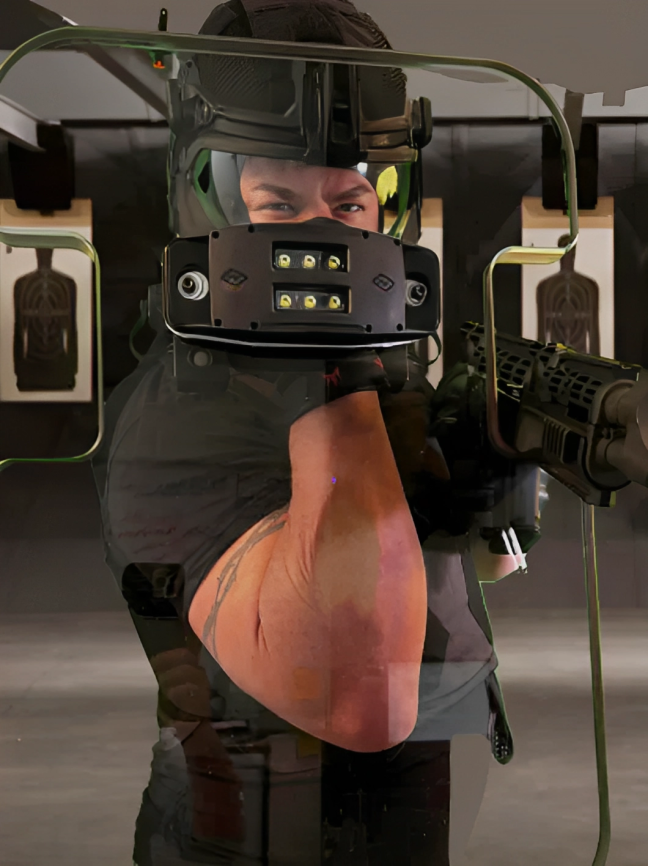

SPECIFICATIONS RANGE: 200 feet line of site 100 feet obscured VOLTAGE: 50,000 VOLTS PULSE RATE: 17 to 22 pulses per second CURRENT: 3 to 4 milliamps equivalent FEATURES one size fits all with D ring for handcuffs fcc compliant safety dual activation switches proven XR-5000 technology made in USA Research on use of electrical control device: Evaluation of the electric shock hazard for the Nova XR-5000 Stun Gun ABSTRACT The Nova XR-5000 was extensively evaluated from the standpoint of electrical safety. By subjecting a stock model of the device to various physical and biological testing procedures. The output of the device has been characterized and found to belong to a class of pulse generators known as relaxation oscillators. It takes advantage of some miniaturization techniques for size reduction needed for a hand-held instrument. The output energy is very low even though the measured potential under load is in excess of 50,000 volts. Electrical "skin effect" and certain physiologic characteristics of excitable tissues make the device more effective in stimulating superficial nerves than muscles. Cardiac muscle appears to be completely insensitive to its effects. This finding greatly reduces the concern that the use of such a device in a wide variety of unknown subjects may result in untoward cardiac reactions of the kind seen in persons being shocked from faulty household or industrial appliances. INTRODUCTION During the fall of 1984. the Douglas County Nebraska Sheriffs Office sought to gain an independent evaluation of a new electronic defensive weapon known as the Nova XR-5000. Although this device is being marketed widely without significant restrictions, those responsible for the decision whether or not to incorporate it into the Sheriffs inventory desired answers to certain safety questions about the device which had not been addressed heretofore in manufacturer's promotional materials or in other published reports about the device. In addition, there are questions which would logically be raised by the public if such devices were to come into general use by law enforcement. Accordingly, the evaluation team set about to find consultative resources with knowledge and experience both in the field of electrical safety and the medical aspects of the interaction of electrical stimuli with biological systems, especially human subjects. This report constitutes the result of these evaluations. LITERATURE REVIEW A systematic review of the medical literature was undertaken utilizing the National Library of Medicine computer search service MEDLINE In addition, various authors known to be active in the field of electrical safety and electrical injury were cross referenced through the UNMC Library's Citation Index. Overall, approximately 500 articles published between 1975 and the present were reviewed by title, author, or by abstract Approximately 20 of these were reviewed in depth. The computer search criteria were adjusted to determine the effect on yield of pertinent articles. When strict criteria were employed, i.e., the combination of "electric injury," "electronic weapons," and various near modification of these descriptors, no one pertinent article was recovered. This discovery suggested that there has not been significant reported work in the specific area covered by this report over the past 10 years. Significant confidence that the search was adequately sensitive was gained when neighboring topics such as electric therapy, electronic torture, and electric eroticism produced numerous reports. If this new control concept in law enforcement becomes as popular generally as it appears to be regionally, reports of this kind should be welcomed into the medical literature. It should be noted that articles on electrical hazards and electrical safety do not always appear in medical journals. One likely location for such articles would be in professional engineering journals. Author cross referencing appears to have picked up most of these and it is doubtful that there are many of significance which were missed. The particular citations to the literature listed in the sections on Theory of Operation and Potential Medical Hazards are referenced in the appendix. THEORY OF OPERATION The stated mechanism for effectiveness of the Nova XR-5000 is related to the interaction of the electrical impulses produced by the device with the nervous and muscular systems. The term "temporary incapacity" is used to describe the effect of the Nova XR-5000 on persons in whom control of their aggressive actions is a primary police objective. Nerve and muscle tissue, although differing rather substantially in certain specific characteristics of electrical stimulation, are in fact quite similar in the major category of "excitability", which is of primary importance here. Precise differentiation of which of these two types of tissue is stimulated preferentially by the electrical stimulus is made somewhat more difficult in gross laboratory evaluation by the fact that nerves normally activate muscles, therefore a particular muscle contraction in response to a Nova XR-5000 stimulus, for example, might have been caused indirectly by activation of the motor nerve feeding that particular muscle and not directly by the muscle itself. It is a well known principal of physiology dating back to the 1700's and the classical work of Galvani that nerve and muscle-including heart muscle-can be stimulated to react, each in its own characteristic way, by the application of electrical stimuli of the proper kind. From this knowledge one can postulate that some-electrical stimuli may well be improper and hence ineffective in causing excitation of nerve and muscle. It is reasonable to assume that there is a spectrum of electrical stimuli which are in an intermediate zone between very effective and ineffective. Such stimuli may be called "marginally effective" and it is in this category that the output from the Nova XR-5000 generator probably belongs. Electrical energy in small amounts may stimulate tissue to respond normally. Higher energies may stimulate as well as damage tissue. This damage or injury effect is primarily, although not exclusively, related to the heating effect of electrical current passing through tissue. Specifically, heat production in watts is related to the current in amps squared. Each kind of excitable tissue, nerve, muscle, heart, etc., is most efficiently excited by electrical stimuli of quite precise characteristics of intensity (voltage or current) and timing (pulse shape and duration). Deviation from the optimum characteristics in either direction means generally that more electrical energy must be injected to cause the same reaction, thereby reducing the efficiency and tending toward thermal injury. Nerves favor brief duration stimuli while heart muscle requires much longer duration impulses to become activated. This is due to the much higher electrical capacitance of heart tissue than of nerve tissue. Since the Nova XR-5000 generates extremely short duration impulses measuring only a few millionths of a second, one might expect it to be totally ineffective in stimulating heart muscle, no matter how intense the stimulus. This is indeed the case. These ultra short duration impulses are only slightly effective in stimulating nerves even though the intensity, as measured in terms of peak voltage, may be thousands of times greater than the minimum amount necessary if the stimulus were longer in duration. The extreme brevity of the stimulus pulse as produced by the electronic timing circuit in the Nova XR-5000 accounts for the fact that even though the pulses may be of such enormous voltage so as to cause ionization of the air, the production of ozone, and the formation of discharge arcs, the duration of these pulses is so short that only a few nerves in the close vicinity of the pulse generator are actually stimulated. Cardiac tissue, normally far removed geographically from the Nova XR-5000 in its customary mode of application, would not and could not be stimulated even if it were in direct contact with the Nova XR-5000 due to the unique characteristic of heart tissue requiring relatively prolonged stimulating pulse for effective stimulation. The physiologic principal governing these observations is known as "tissue chronaxie." The principal relates stimulus intensity to stimulus duration and, as noted above, is not constant but varies widely from one tissue type to another. It may vary from one moment to the next in the same tissue, depending on physical and chemical surroundings. The shorter the duration of an electrical impulse, the higher its intrinsic frequency components. in the case of the Nova XR-5000. the major energy component of the shock pulses is actually in the radio frequency spectrum rather than the audible sound spectrum where most functional nerve and muscle stimuli are located. This well known and predictable phenomenon results in the so-called skin effect wherein high frequency electrical currents crowd to the surface of an electrical conductor such as the human body and do not penetrate to the nerves and muscles beneath. It is well known, for example, that one may touch a radio transmitter antenna possessing thousands of volts of electrical potential and experience no sensation or muscle contraction at all. The Nova XR-5000 produces some sensation, but not of the severity as would be expected if its pulses were of longer duration. The relationship between the frequency of stimulation and the gross effect on muscle contraction was determined by Dalziel. Although his experiments relate the so-called "let go" current to the frequency of stimulation, a somewhat different physiologic situation, the results have the advantage of having been obtained in human subjects. As pointed out above, very short duration pulses are only marginally effective in stimulating excitable tissue. This is a desired circumstance in the design of the Nova XR-5000 since the region of the body affected by the discharge of the pulses is quite limited and the effect on the body. no matter how long the Nova XR-5000 is applied, is brief. the device produces a brief period of incapacitation and no significant residual effect such as burning or damage to tissue appears to be possible. The heart is not directly stimulated at all, and potentially hazardous subtle or gross rhythm abnormalities of the kind associated with accidental electrocution (from a faulty electrical appliance, for example) are not possible. Furthermore, the energy requirement from the Nova XR-5000 supply battery is low if the shock pulses are of short duration and produced at a low repetition rate. The Nova XR-5000 produces pulses of such brief duration that the electrical energy contained in each pulse is only about 0.001 watt-second (Joules). At a pulse repetition rate of 20 pulses per second, which is average for the Nova XR-5000, the amount of energy delivered in a one- second discharge to a human subject (and the amount of energy drawn from the battery, which should be roughly equal) would be about 2 watt-seconds (Joules). A fully charged 8.4 volt NiCad transistor radio battery, such as is used in the Nova XR-5000, will effectively deliver about 120 Joules. This would mean the gun can operate for about two minutes continuously, or can produce about 30 shock bursts of four seconds each. These performance specifications will vary from day to day and from unit to unit depending, for the most part, on the condition of the battery. The battery, in turn, is dependent on temperature, as well as its usage history and its state of charge. The physical and electrical design of the unit is quite straight-forward with perhaps one exception, that being the purposeful placement of metal studs transversely across the output terminals. The configuration and spacing of these terminals promote air breakdown and arc formation when the device is not under a dissipative load. The pulse is generated from a "fly back" type transformer similar to that used in television sets to generate the high electron accelerating voltage for the picture tube. The Nova XR-5000 employs a much slower repetition rate (20 pulses per second) than a TV (15,000 pulses per second) and no high voltage rectifier is needed, thereby eliminating several critical and expensive components required of a TV. Furthermore, TV set designers go to great lengths to prevent arcing and corona formation in surrounding air-processes which dissipate needlessly and create radio frequency interference in the vicinity. Nova XR-5000 on the other hand, promotes arcing by the positioning of the sharp, laterally positioned metal probes across the output in such a way that an audible and highly visible air discharge occurs for each pulse not dissipated into a subject through the forward facing probes. This "default discharge" is actually necessary for optimum operation of the device, since it stabilizes the output between load and no load conditions. A question frequently asked is, "How is the Nova XR-5000 different from a cattle prod?" These devices are designed to repel animals through the means of electrical shocks. The cattle prod differs in several very important ways other than physical appearance. (See appendix.) First, the cattle prod is capable of causing tissue injury since its internal or source impedance is much lower than that of the Nova XR-5000 (so is a fence charger as well as an electronic automobile ignition), and it can cause greater amounts of electric current to flow through the body in a given time than can the Nova XR-5000, even though the Nova XR-5000's voltage may actually be considerably higher. It is the deep penetration of electric current in to tissue which not only stimulates but is potentially hazardous due to the thermal effects mentioned earlier. In addition, the duration of the cattle prod's pulses arc over 10 times longer than the Nova XR-5000's and the repetition rate is 10 times faster, making it a very effective tissue stimulator as contrasted to the Nova XR-5000 which, as noted above, is only marginally effective. Furthermore, the longer duration of the cattle prod pulses brings them into the range of being able to stimulate the heart directly. Indeed, the cattle prod pulse characteristics render it potentially hazardous to heart rhythm. However, because of the close electrode spacing (about 1 inch) and the great distance between the prod electrodes and the heart, the current flow pattern in the region of the heart is very limited in conventional usage. The much larger battery packs required of cattle prods (2 ampere-hour as compared to the Nova XR 5000's .08 ampere-hour) attest to the major difference between the devices. POTENTIAL MEDICAL HAZARDS The Nova XR-5000 is not a medical device. The manufacturer makes no claim of diagnostic or therapeutic efficacy about the device. Since no such claim is made, the device does not fall under the jurisdiction of the Device Amendments to the Food and Drug Act-1976, which laws prescribe detailed testing of new medical devices before manufacture. Also, the FDA imposes strict regulations for quality assurance in the manufacturing process of medical devices. No detailed performance specifications were provided with the instrument, so there is no simple way short of returning the device to the factory to ensure that its operating characteristics are being maintained. This presents a potential hazard from the standpoint of a possible performance failure. Although unlikely, a malfunction might cause a change in the electrical characteristics and result in the output becoming substantially more injurious, even though the device appeared to function normally. As pointed out in the preceding section, the Nova XR-5000's output, when operating normally and when used in the prescribed manner, is not a significant hazard to normal adults. Impulses delivered to the subject's face and especially near the eyes could affect vision and possibly cause eye damage. This possibility was not specifically tested in this protocol. Electrically sensitive subjects—those whose heart rhythms are unstable because of being on certain drugs, or with pacemakers, or who have recently had chest surgery or possibly a recent heart attack—are a special class of individuals in whom lower than normal electrical currents or possibly even the fright of being shocked with the device could conceivably induce medical problems. Some of these possibilities were tested by creating an electrically unstable circumstance in an anesthetized animal and delivering the full output of the Nova XR-5000 directly to the heart muscle by means of an intracardiac electrode catheter. Recordings of these trials are included in the appendix. The study showed no effect on cardiac rhythm Or pumping and only a mild and transient effect on blood pressure with direct stimulation to the inside of the heart. Surprisingly, the surface electrocardiogram only showed a minor shift in baseline during the application of the shocks and a prompt return to normal when the shocks were discontinued. Increased electrical susceptibility was created in the animals by injection of 1 mg of 1:1000 epinephrine intravenously. A characteristically rapid heart rate and blood pressure rise ensued, but the Nova XR-5000 was still ineffective in creating heart rhythm disturbances under these conditions of augmented sensitivity. Ordinary pacemaker pulses delivered under these circumstances caused immediate ventricular fibrillation. Another type of enhanced electrical susceptibility that could conceivably be encountered is in the subject with an implanted cardiac pacemaker. Pacemakers themselves have been reported to be susceptible to certain kinds of electromagnetic interference, and even now patients with pacers are warned about the potential hazards of close proximity to microwave ovens, mobile radio transmitters, and the like. Several reports have described interaction between ignition systems of automobiles and even power lawn mowers with cardiac pacers. In order to test the possibility of interference of pacer function due to Nova XR-5000 operation, an anesthetized animal was paced with a programmable external pacer using body surface Sensing electrodes (see appendix for details). In the "asynchronous" mode (no sensing employed) the pacer was immune to Nova XR-5000 shocks virtually anywhere on the animal's body. Only when the shocks were delivered directly to the pacer itself did erratic pacing function occur. The erratic pacing caused extra randomly placed pacer pulses to be emitted. For the most part, these were only effective in causing extra heartbeats limited to the duration of application of the shock. Following termination of the shocks, the rhythm returned promptly to the pre-shock regularity. Neither the pacer nor the heart appeared to suffer any carry-over effects at the conclusion of numerous repetitions of this test sequence. In the "inhibited" mode (sensing required) aberrant pacer function was noted with stimulation sites virtually anywhere on the animal's body. Although this mode of pacer operation is the most commonly employed in practice, the degree of susceptibility noted is unlikely to cause serious clinical problems because the pacer is most likely to be temporarily inhibited and therefore produce few, if any, pulses of its own during this time. The time of application of the Nova XR-5000 is usually only a few seconds, the cardiac effect of which would probably be unnoticed by the patient and unimportant to the heart rhythm. Furthermore, the sensing electrodes for inhibited type pacers are positioned in the heart (usually they are the pacer electrodes themselves), not on the body surface in close proximity to the Nova XR-5000, as was the case in this test. Normally implanted pacers should be considerably less susceptible to this form of interference than was exhibited by this test. Finally, the chance of encountering a person with a functioning demand pacer among the population of individuals likely to be recipients of Nova XR-5000 discharges is probably less than 1 in 10,000 based on the prevalence of pacers in the population. The likelihood that a serious medical problem would arise in a subject even if he had a pacer and if the Nova XR-5000 were employed in the prescribed way is probably less than 1 in 100, making the overall probability of serious consequences less than 1 in a million, hardly a practical concern when weighing the potential benefit of such effective devices in the hands of law enforcement. One hazard of significance which was observed with the frequent use of the Nova XR-5000 in testing was the phenomenon of operator shock. Under a variety of common circumstances, some small fraction of the Nova XR-5000's output is fed back either through the device internally or across the plastic case externally to the operator's finger on the control switch. This problem was worse in high humidity or when the operator's hands were damp as with sweat. It is much worse if the plastic case becomes contaminated with partially conductive materials, such as salt solutions and the like. The hazard is not one of operator incapacity, as would be the case with the subject, but a "startle" effect which could cause the operator to lose control of the device and possibly drop it at a critical time. The problem was solved in the laboratory by simply wearing a surgeon's glove on the operating hand. A more practical solution would appear to relate to the basic construction of the device with a moisture barrier over the switch and other cracks and crevices to prevent their becoming an electrical pathway back to the operator's hand. The sparks generated by the device are quite capable of igniting certain flammable materials, such as gasoline vapor. Caution should be exercised if such vapors are thought to be present. The device appears to be relatively immune to direct physical abuse, withstanding numerous edge drops concrete from a height of 3 feet. The device operated at once on removal from a freezer chest where it had been stored for 24 hours. Battery depletion slows the rate of repetitive discharge. This suggests a handy way to determine quickly the residual battery charge. It should be emphasized that conventional transistor batteries are virtually worthless as a power source since their internal impedance is too high to provide the high current necessary to properly operate the device. Proper battery conditioning with the charger according to instructions is imperative. Finally, the device was discharged into the mucous membranes of the tongue of an anesthetized animal to ascertain the effects on mucous membranes. Muscle twitching did occur but no visual damage to the membranes was noted. Again, the effect directly on the eye was not tested. Until this is more thoroughly evaluated, one should be cautious about the use of this device in the face area. APPENDIX 1. "Textbook of Medical Physiology" Sixth Edition, 1984. W. B. Saunders & Co., Philadelphia 2. Daiziel, C. F. "Study of the Hazards of Impulse Currents." Transactions of the American Institute of Electrical Engineers. Vol. 72, 1953. 3. Dalziel, C. F. "Electric Shock Hazard.' IEEE Spectrum. February 1972. CURRICULUM VITAE ROBERT A. STRATBUCKER Education: B.A. (Physics), University of Omaha, Omaha, Nebraska, 1951-1955 M.D., University of Nebraska College of Medicine, Omaha. Nebraska, 1956-1960 M.S. (Physiology), University of Nebraska, Lincoln, Nebraska, 1961-1962. Thesis: "A Volume Conductor Method for Obtaining Multiple Simultaneous Electrograms for Isolated Hearts" Ph.D. (Physiology), University of Nebraska, Lincoln, Nebraska, 1962-1964. Thesis: "Computer Analysis of the Ventricular Gradient of Isolated Mammalian 1-leans" P.E. Registered Professional Engineer. State of Nebraska, by examination, 1964 Right Surgeon, USAF School of Aerospace Medicine, San Antonio, Texas, 1981 Academic Appointments: Director, Radiological Research, Department of Radiology, University Medical Center Instructor through Associate Professor in four departments of the University - Physiology and Biophysics. Internal Medicine, Electrical Engineering, and Radiology. Full member of Graduate Faculty. Responsible for full spectrum of teaching, research, administration and patient care responsibilities associated with full time medical school academic appointment. Memberships in Professional Societies: Institute of Electrical and Electronic Engineers Biomedical Engineering Professional Group Society of Professional Engineers American Heart Association American Medical Association State Medical Association County Medical Association Society of Nuclear Medicine Robert A. Stratbucker, M.D., Ph.D. University of Nebraska Medical Center-Omaha 15 January 1985 Bernstein Study -------------------------------------------------------------------------------- Evaluation of the electric shock hazard for the Nova XR-5000 Stun Gun ABSTRACT The electric shock hazard for the XR 5000 is determined by comparing the shock delivered to the known effects of a 60 Hz shock. With 60 Hz shocks a current of 1 mA is at the threshold of perception, 5 mA is at the let-go current level where shocks are painful but not dangerous, and 50 mA is the level where ventricular fibrillation and death can occur. The XR 5000 output is a train of damped, sinusoidal pulses with an approximate 10 u s time constant. The true r.m.s. value of the output is not a valid indication of the hazard because the output contains frequency components well above the 1 kHz frequency above which the effect for a given frequency component is reduced. When these factors are considered, the output for the XR 5000 is in the 3 to 4 mA range of an equivalent 60 Hz shock and is not dangerous. The fact that the shock is delivered between two probes 2 inches apart adds to the safety because the current is concentrated in the region of the body between the two probes and only a negligible current can reach the heart. INTRODUCTION The design of most electrical equipment ensures that an individual should rarely contact energized parts and be subjected to electric shock. For such equipment electrical safety is provided primarily by insulation or guarding to prevent contact and by suitable grounding. Any contact with energized parts is considered hazardous. There are other equipment where, even though it may not be intended, contact with energized parts is expected so that the electrical safety must be provided by ensuring that any possible electric shock will not be hazardous or lethal. Examples of such electrical devices are the electric fence, medical electrical nerve stimulators, welder, cattle prod, and fly electrocuter. The Nova XR 5000 stun gun is an example of a new device where individuals are deliberately subjected to electrical shock. The XR 5000 is a small, hand-held device powered by a 9V battery. There are two small probes extending from the front approximately 5 millimeters, 2 inches apart. The probes are intended to be pressed into an attacker's body so that an electrical shock can be delivered to incapacitate the attacker. It is important that the attacker not be injured, as this is one of the major advantages of the device. This report evaluates the safety of the shock delivered by the XR 5000. This is done by analyzing the output current waveform and comparing this shock to known safe and hazardous shocks. Safety criteria for the electric fence are used to compare the shock delivered to that delivered by the XR 5000. SINUSOIDAL, 60 Hz SHOCKS Electrical shocks involving alternating current have been investigated since before 1890 (Bernstein, 1975). Most of the recent studies have involved sinusoidal, 50 or 60 Hz currents, though the effects of other frequencies and waveforms have also been studied. This report compares the shock delivered by the XR 5000 to an equivalent 60 Hz shock. In order to do this, the effects of 60 Hz shocks are reviewed. THRESHOLD OF PERCEPTION For 60 Hz shocks, the lowest level of current that can be a problem is the threshold of perception level. This level, where some people may feel a slight tingle but should have no extreme startle reaction, Is usually considered to be 0.5 mA r.m.s. for 60 Hz currents and is the maximum allowable leakage current for appliances (ANSI, 1973). Dalziel and Mansfield (1950) have determined that the median threshold of perception current at 60 Hz was 1.067 mA for 28 men and 1.18 mA for four women. Shocks near but above the threshold of perception current may be a hazard because of injury caused by the startle reaction producing a dangerous body motion. VENTRICULAR FILIBRATION At the other extreme is the level of current where the heart may be thrown into ventricular fibrillation and death occurs. For shocks between any two limbs, Biegelmeier and Lee (1980) have re-evaluated experimental data on ventricular fibrillation induced by electrical shock in animals and related the results to the physiological response to electrical shocks. For short duration shocks shorter than a cardiac cycle, the electrical current to cause fibrillation must be large and occur during the vulnerable period, T wave. Shocks longer than a cardiac cycle can cause premature ventricular contractions that lower the shock threshold current to a minimum after four or five premature ventricular contractions. Using these concepts, a safe current limit has been established as 500 mA for shocks less than 0.2 seconds in duration and 50 mA for shocks longer than 2 seconds. For shocks between 0.2 and 2 seconds, the safe current is given by the expression I = 100/T mA r.m.s. (1) where T is in seconds and 0.2 s < T < 2 s. LET-GO-CURRENT The let-go current level of shock is not immediately lethal as is the ventricular fibrillation level. At this level of shock, with a current path through the arm, the individual cannot let go of an energized conductor. This level is hazardous in that a person is receiving a very painful shock from electrical equipment that he cannot release. Such a long duration shock may eventually become hazardous because of evoked heart arrhythmias or a decrease in contact resistance because of perspiration or burns allows greater currents. Dalziel and Massoglia (1956) have determined that the 60 Hz let—go current level where 0.5% of the individuals cannot let-go is 9 mA for men and 6 mA for women. The median let-go level is 16 mA for men and 10.5 mA for women. The let-go level where 99.5% of the individuals cannot let-go is 23 mA for men and 15 mA for women. Underwriters Laboratories (1972) requires that the ground fault circuit interrupter trip with long duration shocks greater than 6 mA as most people can let-go at currents less than 6 mA. The electric fence controller (Underwriters Laboratories 1980) is designed so that any single controller failure will not produce a continuous current greater than 5 mA because of the let-go problem. Currents above an individual's let-go current level could be hazardous and painful because the individual would be frozen to the circuit. EFFECT OF FREQUENCY The frequency of the electrical current is important in determining the effect on the human body of a given magnitude of current. When testing appliances or medical devices for leakage current, test loads have been devised which are supposed to simulate the response of the human body to the various frequency components in the leakage current. In order to do this, an electronic voltmeter is connected across the simulated load in such a fashion that a given reading of the voltmeter at any frequency is equivalent to the same effect shock. Underwriters Laboratories (1976) specifies a test load to measure leakage current such that the allowable leakage current is the same for all frequencies to 1 kHz. The allowable leakage current is increased directly proportional to the frequency for frequencies higher than 1 kHz up to 100 kHz. Above 100 kHz the allowable leakage current is the same as at 100 kHz——100 times the value at 1 kHz. The equivalent dc shock current for the same effect is taken as 40% larger than the 60 Hz current. The ANSI/AAMI (1978) test load is similar. There is a question as to whether the effect on the human body of a shock from a non-sinusoidal, periodic waveform can be considered the same as the effect of each individual frequency component effect summed appropriately. Until further data are available, there is no other way to analyze a non-sinusoidal, periodic waveform. THE ELECTRIC FENCE TRAIN OF PULSE SHOCKS The electric fence controller (Underwriters Laboratories, 1980) provides a basis for determining what is considered a safe electric shock for a train of pulses. The electric fence has been used for many years with the realization that humans will contact the fence but must not be injured. The controller delivers a pulse type output with the output during the "on time" being of the peak discharge-type output or of the 60 Hz sinusoidal-type output. All tests for the controller are performed with a 500 ohm load. The "off period" for the controller must be greater than 0.9 s for a sinusoidal type output or greater than 0.75 s for a peak discharge-type output. This "off period" is essential to allow an individual to get off the fence as the output during the "on period" is greater than the let-go current level. Continuous output is not permitted. Any single failure in the controller must not produce a continuous current greater than 5 mA. The "on period" for peak discharge-type controllers must be less than 0.2 seconds. For this peak discharge-type controller, the output delivered to a 500 ohm load during the "on time" is limited to a given value of milliampere-seconds, charge, depending on the length of the "on period." The curve for the "on period" for peak discharge-type controllers provides allowable milliampere-second values for the time period from 0.03 s to 0.1 s. For "on periods" from 0.1 to 0.2 seconds the allowable output is 4 mA-s. The allowable output is reduced to 2 mA-s for a 0.03 second "on period." For sinusoidal-type output the "on period" must be less than 0.2 s. For "on periods" between 0.025 s and 0.2 s, the allowable current must be less than 1 = 75 — 350T mA r.m.s. where T is the "on period" in seconds. For "on period" between 0.025 s and 0.2 s, equation (2) allows sinusoidal type r.m.s. currents between 65 and 5 mA. These values are well below the 500 mA level considered dangerous for a single shock of such duration. It is important to note, however, that the fence controller produces a train of pulses rather than a single pulse. Noting that the pulse repetition frequency for the sinusoidal-type pulse is approximately 1 Hz, the true r.m.s. current can be calculated for different pulse "on periods" when the r.m.s. value of the current during the pulse is given by equation (2). The results for pulse width between 0.025 s and 0.2 s are given in Table 1 TABLE 1 True r.m.s. Current Related to Pulse Width Pulse Width (T) True r.m.s. Current (s) (mA) 0.025 10.47 0.05 12.84 0.07 13.34 (max) 0.10 12.62 0.15 8.65 0.2 1.9 This indicates that the highest output current is about 13 mA which is above the 60 Hz let-go current for some individuals. The current should not electrocute a person at this level. There still is a question as to whether the true r.m.s. current given in Table 1 can be equated to the effect of 60 Hz currents. The pulse train will have frequency components above 1 kHz. To study the frequency components for the pulse train the Fourier spectrum (Cooper, 1967) for a single pulse is calculated. Because the pulses are periodic with a frequency of 1 Hz, the amplitudes for the individual harmonics are proportional to the value of the Fourier spectrum at discrete frequencies starting at 1 Hz and at all higher frequencies separated by 1 Hz. The peak discrete frequency component is 2/t times the Fourier spectrum value at that frequency where T is the period for the pulses in seconds. Above 1 kHz the effect of the frequency components on the human body decrease inversely proportional to the frequency. Using the Fourier spectrum and the decrease in effect of the shock for frequencies above 1 kHz, the effective r.m.s. current for the nth harmonic is given in equation (3) I n = (75-350T) T ( [sin(n-60 À T / (n-60) À T] + [ sin(n+60) À T / (n+60) À T] ) x {1+(n/105)2}(1/2) / {1+(n/103)2}(1/2) mA r.m.s. where n is the harmonic and, in this case, its frequency (n = 1,2,3,---); T is the "on period" in seconds; and the frequency of the sinusoidal output during the pulse is 60 Hz. Above 1 kHz, equation (3) indicates that the harmonics are small and falling off rapidly so that the frequency components below 1 kHz are the most prominent. Thus, the true r.m.s. current values in Table 1 are equivalent to the 60 Hz values as far as effect on the human body is concerned NOVA XR 5000 SHOCKS The Nova XR 5000 has an output consisting of a train of damped sinusoidal pulses. The current output depends on the electrical resistance between the probes. This will vary depending on the type of contact and whether the shock is delivered through clothes. In comparing current levels between the output of the XR 5000 and the previously discussed physiological effects it is important to take into account the path of the current. Ventricular fibrillation is caused by current traversing the heart. The XR 5000 has a very well defined path between the two closely spaced probes. The current delivered to the heart will be negligible. This makes discussing lethality using the total current a technique that provides an extra margin of safety. Medical inspection of volunteers undergoing XR 5000 shocks revealed no clinically significant changes to their E.K.G. The action of the XR 5000 in causing muscle contraction shows an action much like the let-go phenomenon. In the arm currents of 5 to 10 mA cause this effect. The XR 5000 is battery operated and ungrounded. Any electrical current will only travel between the two probes. A user holding the device and contacting ground with his other hand will receive no shock, as he is not in the current path between the probes. OUTPUT VOLTAGE WAVEFORM AND PARAMETERS The output voltage waveform for the XR 5000 consists of a train of damped sinusoidal pulses where each pulse is of the form v(t) = Vo (e )(-t/T) sin Éd t V the pulse repetition frequency is 16 Hz. From oscilloscope traces of the output voltage for various resistance loads, the parameters in equation (4) can be evaluated. The time constant T, and the frequency, Édcan be measured directly from the trace. V0 is calculated by finding the time, for the first voltage peak and the magnitude of the first voltage peak,Vp from the trace and then using Vp =Vo e(-tp/T) sin Éd tp V to find Vo Using the output voltage traces for loads of 200, '160, and 1020 ohms the parameters shown in Table 2 were determined. TABLE 2 XR 5000 Output Parameters Load resistance (ohms) 200 460 1020 1700 Vp (V) 1500 4000 8000 13,000 tp (µs) ! 2.5 !’ 2 T (µs) ! 10 !’ 8 Vo (V) 2000 5000 10,000 17,600 É(d) (rad/s) ! 7 * 105 !’ 6.28 x 10⁵ fd (kHz) ! 111.4 !’ 100 EFFECTIVE OUTPUT CURRENT Using the values from Table 2, the r.m.s. output current for a pulse train of damped sinusoids with a repetition frequency of 16 Hz can be calculated and are shown in Table 3. TABLE 3 Calculated Effective Currents Load Resistance (ohms) r.m.s. (mA) 200 62.6 460 68.0 1020 61.4 1700 57.4 The effective current shown in Table 3 could be hazardous if they were at 60 Hz; however, the output pulses contain high frequency components which are much less lethal than 60 Hz currents. It is necessary to consider all the frequency components for the pulses using a suitable weighting factor. FREQUENCY COMPONENTS IN XR-5000 OUTPUT The XR 5000 output is a train of damped sinusoidal pulses of the form v(t)=Voe-at sin É dtV The Fourier series frequency components for the train of damped sinusoidal pulses are obtained from the Fourier spectrum (Cooper, 1967) for the single damped sinusoidal pulse of equation (6) and is: F(jw) = Vo É d/{(jw)2 + 2a(j É + (a2 + É d2)} where a = 1/T = 105s-1th Equation (7) can be recognized as a second order system with the following parameters Undamped natural frequency ( Én) = ( a2 + Éd2 )1/2 = 7.07 x 10⁵ rad/s or Undamped natural frequency fn = 112.5 kHz and Damping ratio ¶ = a/ Én - 0.14 Since the bandwidth for such a system is approximately 172 kHz, the spectrum has significant high frequency components within the bandwidth, but these are above the 1 kHz frequency so the effects of electric shock on the human body for a given magnitude current are reduced. Because the damped sinusoidal pulses are periodic with a frequency of 16 Hz, the r.m.s. values for the Fourier series harmonics are proportional to the value of the Fourier spectrum at the harmonic frequency. For this case the Fourier series has its fundamental frequency of 16 Hz with the higher harmonics all the multiples of 16 Hz. Using equation (7), the r.m.s. value for the harmonic at each discrete harmonic frequency, É is I(j É ) = [ " 2f / r] [ Vo Éd / a2+ Éd2 ] [ 1/ {1-[ É2/( a2 + Éd2)]} + j{ 2a É / (a2 + Éd2)} ] A r.m.s. where f =16Hz a ; a = 1/T = 105s-1 wd = 7 X 10⁵ rad/s and w has discrete values at w = 2À (16n) where n = 1,2,3, The true r.m.s. value for the current including the first n harmonics is the square root of the sum of the squares for the first n harmonic values from equation (8). The harmonics from equation (8) must be reduced by introducing the frequency response for the human body when the effects for shock currents are reduced proportional to frequency for frequencies between 1 kHz and 100 kHz. This can be accomplished by multiplying the magnitude for a given harmonic, n, found in equation (8) by the factor: G(jw) = [ 1 + ( f/105)2]1/2 / [1 + (f/103)2]1/2 = (1 + 2.56 * 10-8n2)1/2 / (1 m + 2.56 * 10-4n2)1/2 Combining equations (8) and (9) the r.m.s. values for the current to the 600th harmonic, 9600 Hz, have been calculated and are show in Table 4 Including higher harmonics would not increase the value significantly because of the attenuation at the higher frequencies. TABLE 4 Effective XR 5000 Output for Frequency Components to 600th Harmonic, 9600 Hz Load Resistance (ohms) I (mA) r.m.s. 200 3.03 460 3.29 1020 2.97 1700 3.43 PRIOR STUDIES RELATING TO XR-5OOO TYPE SHOCKS In a report prepared for the U.S. Consumer Product Safety Commission (Bernstein, 1976), another device intended to be used on people and to deliver a train of damped sinusoidal pulses at a frequency of 13 Hz was evaluated. This report indicates that the output was equivalent to an approximate 9 mA, 60 Hz shock. A later study where the effects of the different frequency components were more accurately calculated showed that the device output was equivalent to an approximate 3 mA, 60 Hz shock (BernsteIn, 1983). These techniques were used in this report. The XR5000 is certainly as safe as the device evaluated for the U.S. Consumer Product Safety Commission. In fact, it is safer because the well defined current path between the closely spaced probes of the XR5000 will significantly reduce the current delivered to the heart. CONCLUSIONS 1. Table 4 shows that the output for the XR 5000 is about equivalent to a 3 mA, 60 Hz shock. Such a shock is not dangerous. 2. The 3 mA shock is at about the let-go current level. The shock may be more intense than that caused by such a 3 mA let-go current in the arm because the current density at the probes is greater and because of the sensation caused by the spark from the electrode to the skin. 3. Because the shocking current is only in the path between the electrodes about 2 inches apart, the current that might reach the heart is much less than in a limb-to-limb or an across-the-chest shock. This adds to the safety. 4. The units can be used in a damp or wet environment without hazard to the user. The unit may not work well because leakage between electrodes, but the operator should not be shocked if he keeps his hand in its usual position. REFERENCES ANSI ClOl .1 (1973). American National Standard for Leakage Current for Appliances. American National Standards Institute, New York. ANSI/AAMI SCL 12/78(1978). American National Standard Safe Current Limits for Electromedical Apparatus. Association for the Advancement of Medical Instrumentation, Arlington, VA. Bernstein, T. (1975). Theories of the causes of death from electricity in the late nineteenth century. Medical Instrumentation, 9, 267-273. Bernstein, T. (1976) Letter report to Mr. Neil P. Zylich, U.S. Consumer Product Safety Commission. February 12, 1976. Revised February 7, 1977. Bernstein, T. (1983). Safety criteria for intended or expected non-lethal electrical shocks. Symposium on Electrical Shock Safety Criteria sponsored by The Electric Power Research Institute, The Canadian Electrical Association, and Ontario Hydro. Toronto, Canada. September, 1983. Biegelmeier, G. and W. R. Lee (1980). New Considerations on the Threshold of Ventricular Fibrillation for a.c. shocks at 50—60 Hz. Proc. lnstn Elec. Engrs., 127, 103—110. Cooper, G. R. and C. D. McGiIIem (1967). Methods of Signal and System Analysis. Holt, Rinehart and Winston, New or , pg. 121. Daiziel, C. F. and T. H. Mansfield (1950). Effect of Frequency on Perception Currents. Trans. Am. Inst. Elect. Engrs., 69, part 2, 1162-1168. Dalziel, C. F. and F. P. Massoglia (1956). Let—go Currents and Voltages. Trans. Am. Inst. Elect. Engrs., 75, part 2, 49—56. Underwriters Laboratories (1972). UL 943, Standard for Safety, Ground—Fault Circuit Interrupter, pg. 16B, revised January 7, 1977. Underwriters Laboratories (1976). UL 544, Standard for Safety, Medical and Dental Equipment, 2nd ed., pg. 30, revised January 17, 1977. Underwriters Laboratories (1980). UL 69, Standard for Safety, Electric Fence Controllers, 5th ed., pp. 12-13. Theodore Bernstein, Ph.D. Professor of Electrical and Computer Engineering University of Wisconsin-Madison January 22, 1985